Halloween Safety Tips for Seniors: A 2026 Guide
Quick answer: Halloween is safest when you plan for the three big risks: falls on dark walkways, fire from candles near decorations, and scams from visitors and messages. Use bright lights, keep walkways clear, keep flames away from decorations, and treat any unexpected visitor or urgent message with suspicion. Enjoy the night, but stay alert.
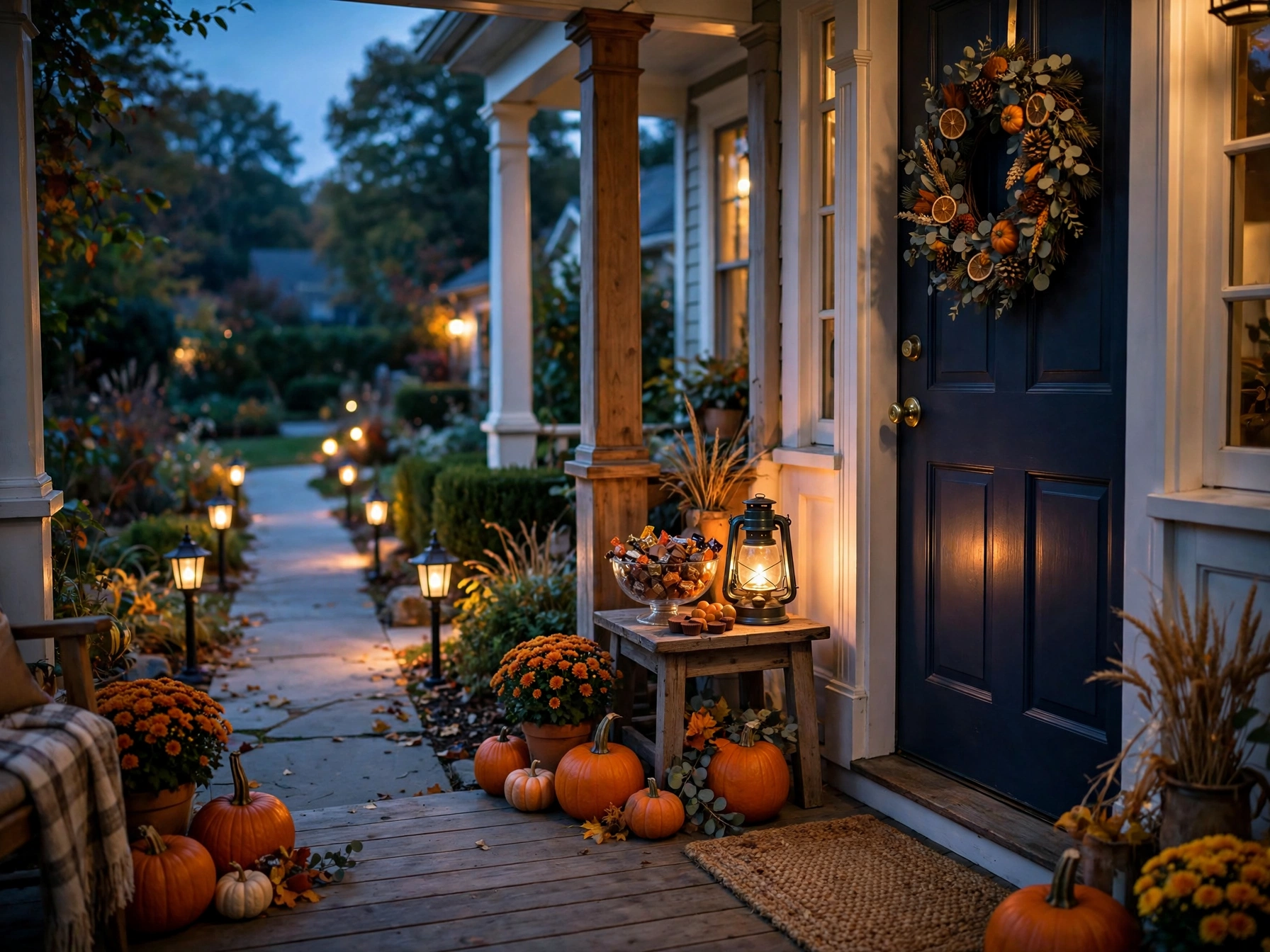
Halloween is for everyone — including the house giving out candy. But October 31st brings three risks that hit older adults hardest: falls on dark walkways, fire from candles near decorations, and scams from visitors and messages that aren't what they seem.
Don't let any of that keep you from enjoying the night. These 17 practical tips cover decorating, candy-giving, lighting, and fraud — so your Halloween is all treats.
Decorating without fall or fire risks
1. Light every step. Battery lanterns or LED stake lights along the walkway aren't just decoration — they're the single most effective fall prevention on Halloween night.
2. Banish real candles. LED tea lights and flameless candles give the same glow with zero fire risk near fabric ghosts, paper bats, and dried corn stalks. Please trust us on this one.
3. Tape down every cord. Extension cords for outdoor lights are trip wires in the dark. Run them along walls and tape them flat, or go fully battery-powered.
4. Keep the path 36 inches clear. Move pumpkins, hay bales, and decorations to the sides of the walkway — never in it. Excited kids in costumes with limited visibility will be using that path.
5. Decorate at waist height, not ladder height. Hanging ghosts from a stepladder is how falls happen. Use extension poles, or stick to decorations you can reach from the ground.
6. Choose stable over tall. That 6-foot inflatable looks fun until October wind arrives. Ground-level displays can't fall on anyone.
Giving out candy safely (including living alone)
7. Use the storm door. Talk and hand out candy through a locked storm door or security screen — you stay friendly without opening your home to strangers.
8. Try the candy station. A decorated table near the door with a candy bowl and a cheerful sign ("Take two! Happy Halloween!") means no door-answering at all. Refill between waves.
9. Keep your phone on you. Not in the other room — in your pocket. If anything feels off, you want it in hand.
10. Set an end time and stick to it. When the candy runs low or your chosen hour arrives (8 or 9 PM is common), turn off the porch light. That's the universal "we're done" signal.
11. Don't let visitors inside. Not to "see the decorations," not to use the bathroom, not for any reason. A warm smile at the door is plenty.
Lighting your walkway
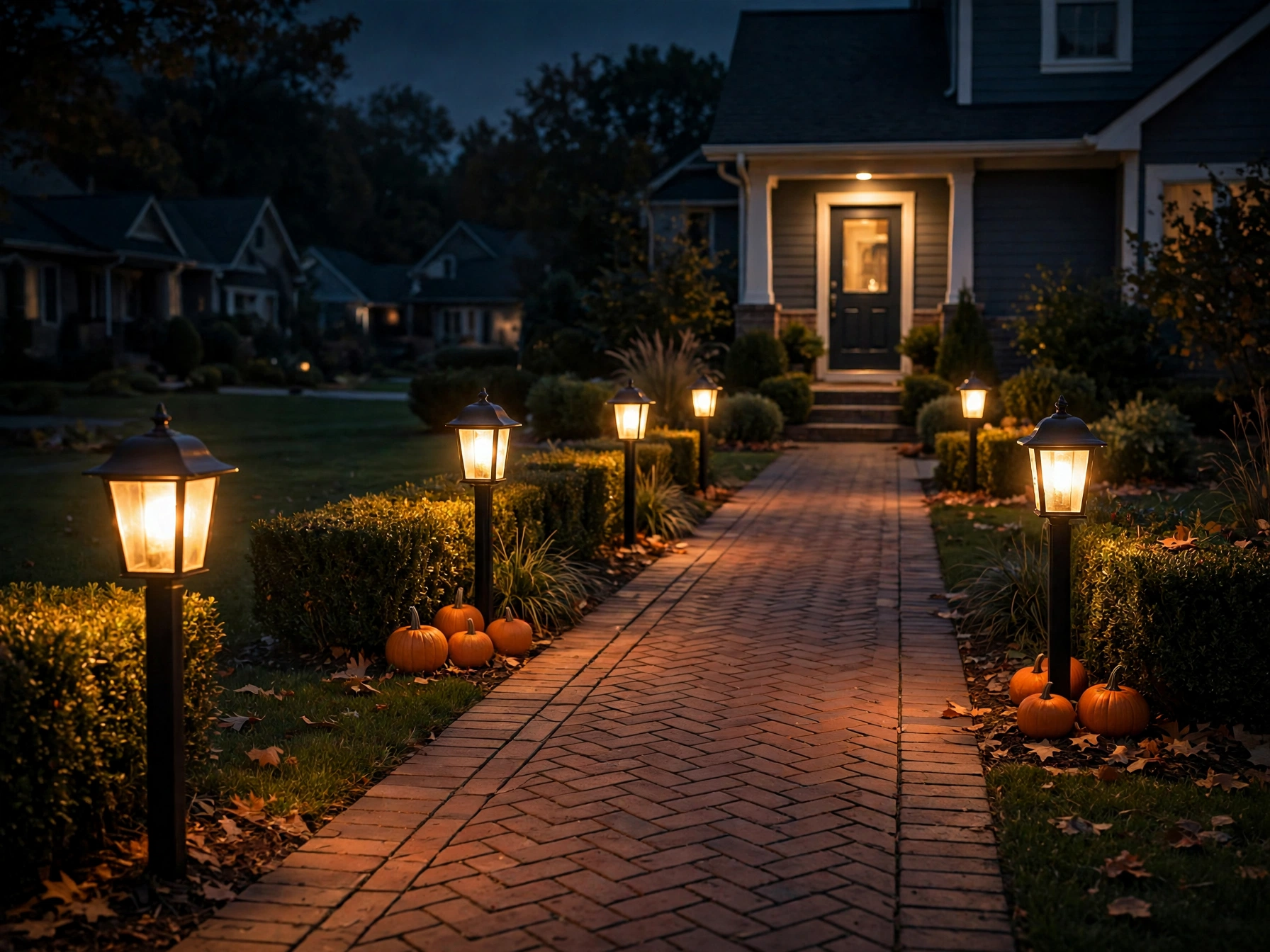
12. Light it like a runway. Space warm-white lights every 3–4 feet on alternating sides of the path. You're lighting for other people's feet, not for atmosphere.
13. Put lights on timers. A $5 dusk-to-10pm timer means the walkway is lit every evening without you remembering — and dark when trick-or-treating ends.
14. Check it yourself at night. Walk your own path after dark before the 31st. You're checking for dark spots, glare in visitors' eyes, and anything you'd trip on.
Halloween-night scams to watch for
15. The "utility worker" at your door. Someone in a vest claims they need to check your meter or wiring "because of Halloween vandalism." Real utility workers don't make surprise night visits — don't open the door. Call the utility's published number if unsure.
16. Fake charity collectors. Costumed "collectors" with no ID, no paperwork, pressuring for cash. Real charities don't trick-or-treat for donations.
17. The candy-bowl distraction. One person keeps you chatting at the door while another slips around back. The storm-door and candy-station habits above defeat this completely.
And it isn't just the doorstep: October brings waves of Halloween-themed scam texts and fake costume websites. If any message or caller pressures you, hang up and check it with our free scam checker.
Your Halloween safety checklist
- Walkway lit every 3–4 feet, on a timer
- All candles are LED — zero real flames
- Cords taped flat or eliminated
- Path 36 inches clear of decorations
- No ladder-height decorating
- Storm door or candy station ready
- Phone in pocket all evening
- End time chosen; porch light = the signal
- Nobody comes inside, no exceptions
- Scam checker bookmarked for suspicious texts
Print this list, stick it on the fridge, and enjoy the night. You've earned the fun part.
Frequently Asked Questions
Is it safe for seniors living alone to give out Halloween candy?
Yes, with a few precautions: keep your porch well-lit, use a storm door or candy bowl station so you don't open the door fully to strangers, keep your phone nearby, and stop answering the door after your chosen end time (8 or 9 PM is common). A "candy bowl on the porch" with a friendly sign is a perfectly good option if you'd rather not answer the door at all.
What are the biggest Halloween safety risks for older adults?
Falls are number one — dark walkways, extension cords, and cluttered porches. Next come fire risks from real candles near decorations, and Halloween-night scams (fake charity collectors, "utility worker" visitors). All three are preventable with the tips on this page.
Should seniors use real candles in Halloween decorations?
No — battery-powered LED candles and tea lights give the same warm glow with zero fire risk, and they're safe near the fabric, paper, and dried foliage that Halloween decorating involves. LEDs are the single biggest safety upgrade in modern Halloween decorating.